Coffee Machine
What if your coffee machine evolved with the beans you chose?
Most conversations about coffee obsess over equipment: grinders, portafilter machines, water pressure. What gets far less attention is the coffee itself, where it comes from, how it was processed, and whether the people who grew it were paid fairly. Jan Hankel’s speculative design asks what happens when a machine makes that imbalance impossible to ignore.
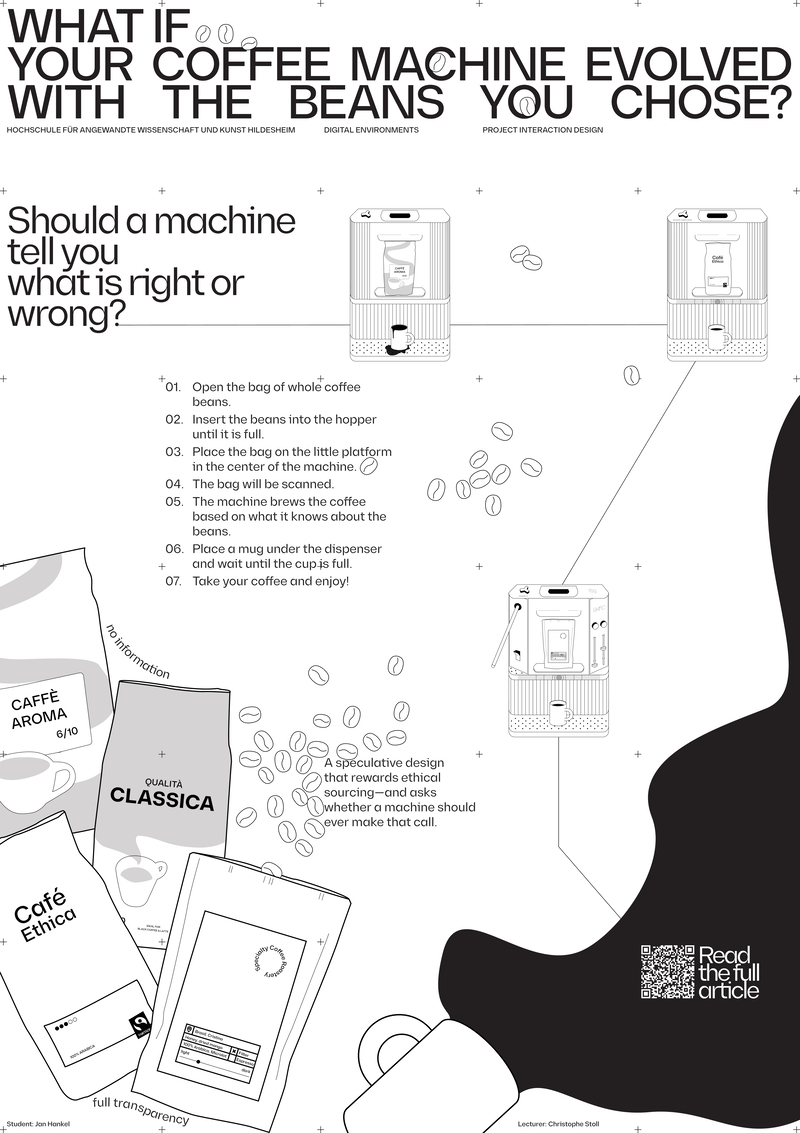
The concept is a coffee machine that scans the bean bag you place on a small platform at its center. It brews based on what it can learn from that bag. With supermarket coffee, there is almost no information to work with: no origin, no roast date, no transparency. The machine behaves accordingly, offering no feedback, no control, a frustrating black box that just dispenses liquid. With Fairtrade-certified beans, a little more is possible: the machine shows its extraction settings, and a voice begins talking about the weather in the country where the coffee was grown. With specialty coffee from a local roastery, full origin and processing information unlocks everything: panels fold open, a steam wand appears, the grinding becomes almost inaudible, and the voice connects you to the farm in Minas Gerais from outside your kitchen window.
The machine rewards ethical sourcing. But the article asks the harder question: should it? Is this a useful nudge toward better choices, or a machine telling you what is right and wrong? The project sits in that tension, not resolving it but making it felt in every cup.